

Overview
Overview
Nepal is a paradise for hikers, offering breathtaking views of the Himalayas, ancient temples, old and traditional towns, jungle adventures, sacred sites, and majestic mountains—making it one of the world’s most remarkable travel destinations. You will enjoy the enchanting mountain landscapes rising before you, while having the opportunity to cross deep gorges, traditional villages, waterfalls, alpine lakes, and awe-inspiring peaks.
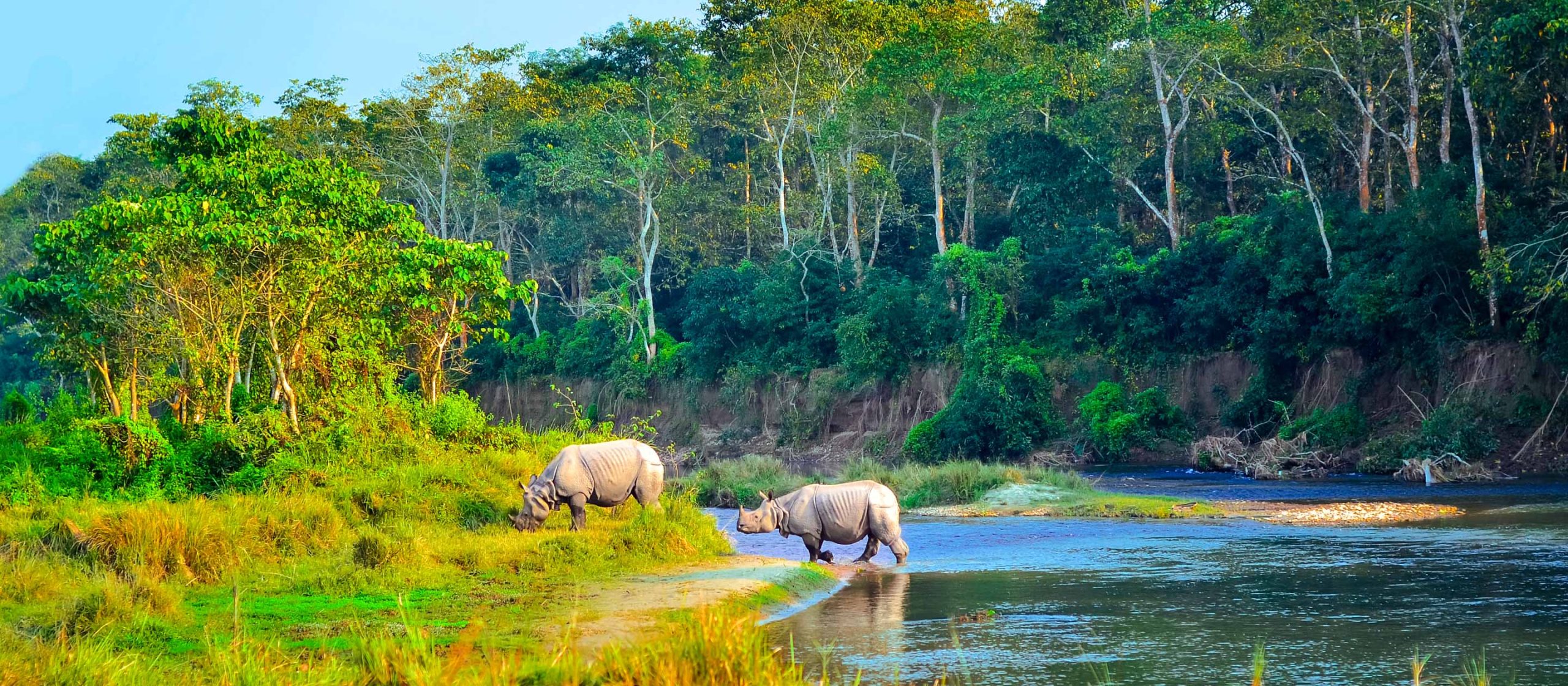
However, a visit to Nepal is certainly incomplete without exploring the jungle of Chitwan. In a country best known for its stunning high mountains, the vast lowland plains of the Terai stretching across southern Nepal and Chitwan National Park offer an exceptional wildlife experience with rich flora and fauna. The Bengal tiger, deer, rhinoceros, and crocodile are among the wild animals found within the park’s protected area.
Tour Ηighlights:
– Visits to sacred sites of Nepal
– Accommodation in traditional settlements
– Ascent to the summit of Tserko Ri (5,033 m)
– Trekking through Langtang National Park
– Visit to the highest settlement in the Himalayas
– Visit to the ancient Kyanjin Gompa Monastery
– Stay and exploration in the Chitwan jungle
– Rafting on the Trishuli River
Itinerary
Day 1: Arrival in Kathmandu (1,350 m). Meeting at the airport and transfer to the hotel
A journey to Nepal would not be complete without exploring the city of Kathmandu. The colorful capital of Nepal is a fascinating blend of traditional architecture and 20th-century influences. Its rich artistic and cultural heritage is evident where intricately carved balconies coexist with beautiful shrines and temples. The city has been designated a UNESCO World Heritage Site and is home to countless monuments, sculptures, artistic temples, and remarkable works of art.
Once the plane lands in Kathmandu, our local partner in Nepal will meet us at the arrivals gate of Tribhuvan International Airport and transfer us to the hotel. Upon arrival at the hotel, our representative will assist you with the check-in process and hand over the room keys.
We will visit Pashupatinath Temple, located on the banks of the Bagmati River, 5 kilometers northeast of the Kathmandu Valley. It is considered one of the holiest sites in Hinduism and has been a UNESCO World Heritage Site since 1979. Another defining feature of Pashupatinath is the Bagmati River, which is world-famous for its cremation ghats where Hindu funeral rites take place. We may have the opportunity to witness cremation ceremonies, see Hindus meditating, and pilgrims bathing in the river.
We will also visit the Monkey Temple (Swayambhunath), where a guided tour will take place with a Greek-speaking guide.
In the afternoon, the group will gather with the trek leader for a short briefing and a meet-and-greet with your local Nepali guide, who will provide all the necessary information about the route. This will be followed by a welcome dinner.
Highlights:
– Welcome to Kathmandu – Airport pickup and reception at Tribhuvan International Airport – Transfer to the hotel by private vehicle
– Visit to Monkey Temple and Pashupatinath Temple
– Briefing by the trekking guide
– Meeting with the rest of the group
– Welcome Dinner
Meals: Dinner
Day 2: Drive from Kathmandu to Syabrubesi
Our journey for the Langtang Valley Trek begins with a long drive from Kathmandu to Syabrubesi. After breakfast, the vehicle will be waiting for us at the hotel entrance to begin our trip. The drive takes approximately seven (7) hours from Kathmandu to Syabrubesi.
As we depart from the capital, we will pass through various traditional villages, characteristic terraced farmlands, lush green hills, and rivers flowing through the landscape. The highway continues up to Gahlcci, after which we leave it and head toward Trishuli Bazaar.
From that point on, the road becomes generally rough. Following the road along the Trishuli River, we reach the village of Dhunche, the administrative headquarters of the Rasuwa district. After about another hour, we arrive at Syabrubesi.
Syabrubesi is a beautiful village within Langtang National Park, surrounded by lush green hills and forests. It also serves as the starting point for most trekking routes in the Langtang region. The local community, culture, festival traditions, and the famous religious pilgrimage “Kailash Yatra” place Syabrubesi at the center of both domestic and international tourism.
Highlights
- Scenic drive from Kathmandu to Syabrubesi
- Beautiful landscapes along the route
- Walk around the Langtang village area
Meals: Breakfast, lunch, dinner
Day 3: Trek from Syabrubesi (1,503 m) to Lama Hotel (2,500 m)
Early in the morning after breakfast, we will pack our belongings and begin our trek. Crossing the small suspension bridge over the Ying Yang Khola, we leave the road behind and enter the narrow trekking trail. We will walk alongside the Langtang Khola River through a landscape full of contrasts.
Hiking along trails lined with oak and rhododendron forests, lush meadows, and primitive Tamang villages, we will enjoy breathtaking views of the great Himalayan peaks.
Today’s route passes through Langtang National Park, a wildlife sanctuary of the region and a favorite destination for birdwatching. Throughout the trek, it is very likely that we will encounter exotic birds and langurs (leaf monkeys). We will pass through several small settlements such as Tiwari Gaon, Bamboo, and Rimche, where we will experience firsthand the culture and lifestyle of the local Tamang people. These villages are deeply influenced by Tibetan culture and way of life. From Rimche onward, the trail becomes steep and fairly challenging until reaching Lama Hotel.
Highlights
– Crossing steel suspension bridges
– Beautiful trails under the shade of oak and rhododendron forests
– Chance encounters with exotic birds and wildlife
– Passing through beautiful traditional settlements
Hiking time: 6 hours
Meals: Breakfast, lunch, dinner
Day 4: Trek from Lama Hotel (2,500 m) to Mundu via Langtang Village (3,430 m)
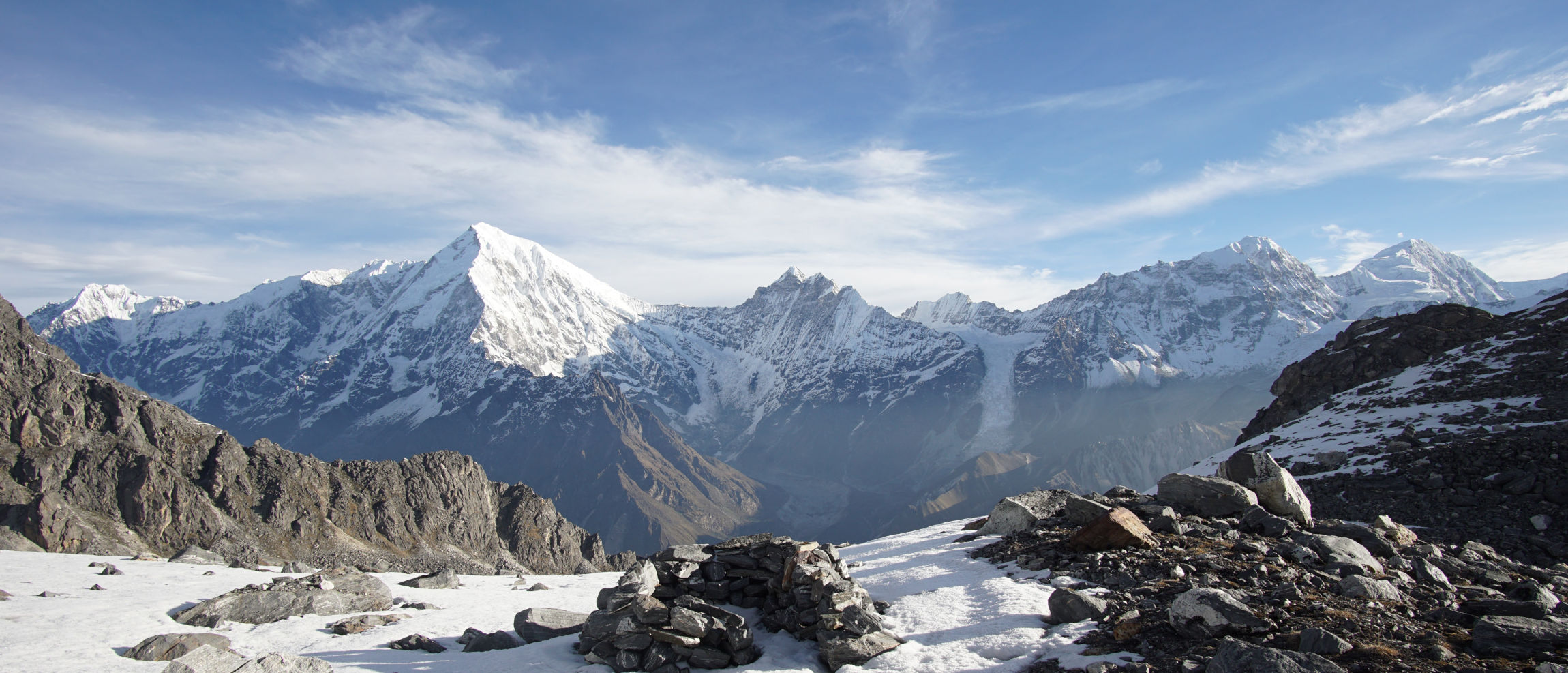
After breakfast and with renewed energy, we prepare for today’s trek. The panoramic views of Himalayan peaks such as Langtang Lirung, Ganesh Himal, and Dorje Lhakpa along the route from Lama Hotel to Mundu are truly spectacular.
The region is home to rare wildlife, and passing through traditional villages of the local Sherpa and Tamang people while observing their customs makes the journey even more fascinating. The trail ascends gradually along the slope of the Langtang Khola. Along the way, we will encounter several waterfalls descending from Langtang Lirung.
Continuing our hike, we reach the clearing of Ghoda Tabela, where we stop for a snack and enjoy the magnificent view of the Langtang Valley stretching out before us. From Ghoda Tabela, already at around 3,000 meters, the trail emerges from the forest and continues to climb gently as the valley widens. We pass a few seasonal settlements used by herders who bring their livestock to the high pastures during the summer months. Here, we are likely to spot our first yak if we haven’t already.
We then continue toward Langtang Village, which offers access to numerous trekking destinations. The village lies in a narrow valley inhabited by the Tamang people, whose lifestyle closely resembles that of Tibetan villages. However, the language, culture, and traditional customs of the Sherpa in this area differ significantly from those of the Sherpa in the Everest region. Along the way to Langtang, we will pass several traditional villages and an ancient monastery.
Langtang Village was completely buried by a landslide in 2015. Today, the new settlement has been rebuilt a short distance from the old site. After visiting Langtang, we continue to Mundu, where we will spend the night.
Highlights
- Passing waterfalls and dramatic mountain scenery
- Enchanting views of the Langtang Valley from the Ghoda Tabela clearing
- Passing through traditional Tamang villages and an ancient monastery
- Overnight stay in Mundu
Hiking time: 6–7 hours
Meals: Breakfast, lunch, dinner
Day 5: Trekking tour from Langtang Village (3,430 m) to Kyanjin Gompa (3,870 m)
After breakfast, today’s hike begins along the trail to Kyanjin Gompa. We first walk for about one hour to reach Mundu. The trek from Mundu to Kyanjin Gompa starts by crossing the impressive Mani Wall. The trail ascends gradually, crossing several small streams via wooden bridges.
Along the way, we encounter Buddhist shrines, water mills, offerings, and stone walls carved with sacred inscriptions. Continuing the hike, we pass through yak pastures and charming traditional villages, all while enjoying stunning mountain views.
Upon arrival at the settlement, there will be time to rest and take in the breathtaking scenery. Kyanjin Gompa is the most important Buddhist pilgrimage site in the region. The area consists of a monastery and the surrounding village built around the Gompa. Trekkers usually spend an extra day here for acclimatization.
In the afternoon, we take a walk around the village and visit the Kyanjin Gompa Monastery.
Highlights
– Trekking along a route filled with Buddhist shrines, offerings, and stone walls with sacred inscriptions
– Breathtaking views from Kyanjin Gompa
– Explore the traditional Kyanjin Gompa village
– Visit to the ancient Kyanjin Gompa Monastery
Hiking time: 4 hours
Meals: Breakfast, lunch, dinner
Day 6: Hike to Tserko Ri (5,033 m)
A rest day in Kyanjin Gompa to explore the highest settlement area in the Himalayas. Early in the morning, we head toward the summit of Tserko Ri. We will start early, trekking through yak pastures to reach the peak in time for sunrise over the Himalayan mountains. The hike will take approximately 6–7 hours. At the summit, we will enjoy a packed lunch while taking in the breathtaking views of the Himalayan peaks.
Afterward, we descend back into the valley to explore the meadows and alpine pastures of Langshisha Kharka. Along the way, we will admire glaciers flowing down from the Himalayas and have the chance to get close to the Langshisha Glacier.
We then return to Kyanjin Gompa to visit the famous cheese factory. In this remote Himalayan village, often shrouded in mist, the factory specializes in producing Swiss-style cheese made from local yak milk, which is highly sought after throughout Nepal.
Highlights
– Sunrise hike along the trail
– Summit of Tserko Ri (5,033 m)
– Trekking in the Langshisha Kharka alpine meadows
Hiking time: 6–7 hours
Meals: Breakfast, lunch, dinner
Day 7: Trekking from Kyanjin Gompa (3,870 m) to Lama Hotel (2,500 m)
Today we leave the Himalayas and begin our descent. After breakfast, we start hiking back toward Lama Hotel. We initially follow the scenic trail to Langtang Village and then cross the open land of Ghoda Tabela.
We continue along the downhill path, walking past waterfalls and stunning landscapes. The trail then passes through forested areas along the Langtang Khola river, eventually reaching the riverside. A short walk from there brings us to Lama Hotel for an overnight stay.
Highlights
– Trekking along a scenic trail
– Crossing waterfalls and enjoying breathtaking landscapes
– Passing through several Tamang villages and an ancient monastery
Hiking time: 5–6 hours
Meals: Breakfast, lunch, dinner
Day 8: Trekking from Lama Hotel to Syabrubesi
After breakfast, we begin our hike from Lama Hotel with a steep descent toward Rimche. Today we will walk under the shade of oak and rhododendron trees. In the dense forest, there is a chance to encounter many exotic birds and wildlife.
Passing through several villages, we will finally return to civilization at Syabrubesi. Here, we will rest and have time to explore the village.
Highlights
- Passing through traditional villages along the hike
- Opportunities to spot rare birds and wildlife
- Trekking through dense forest
- Crossing suspension bridges
Hiking time: 4–5 hours
Meals: Breakfast, lunch, dinner
Day 9: Return from Syabrubesi to Trishuli
On the final day of the Langtang Valley Trek, after breakfast we will start our journey to Trishuli by private vehicle.
We will follow the rough road through Dhunche, and the parallel route will lead us to the village of Ramche. Along the Trishuli River, we will pass through villages, terraced farms, and lush green hills. The route is quite demanding until we reach Trishuli Bazaar, where the road gradually improves and connects to the Prithvi Highway at Galchhi.
Highlights
– Traditional villages, changing landscapes, terraced farms, and lush hills
Meals: Breakfast, lunch, dinner
Day 10: Rafting and Transfer to Chitwan Jungle
The Trishuli River is one of Nepal’s most popular rafting destinations. It is suitable for all skill levels and offers a great opportunity to experience the pristine natural beauty of the area, picturesque valleys, dramatic gorges, and the river’s untouched banks. The river’s waters are generally calm and smooth, but there are sections with rapids that make the rafting experience more exciting, challenging, and fun. After this adventure, we will drive to the Chitwan region, a journey of approximately three (3) hours.
Upon arrival in Chitwan, we will check in at the Safari Resort for rest and relaxation.
Highlights
– Enjoy driving through traditional villages, diverse landscapes, terraced farms, and lush green hills.
– Relax along the banks of the Trishuli River.
Meals: Breakfast, lunch, dinner
Day 11: Relaxation / Free Day at Chitwan National Park
Enjoy a full day of free time at the Safari Resort. Relax, explore the surroundings at your own pace, or simply unwind in the natural beauty of Chitwan National Park.
Meals: Breakfast
Day 12: Jeep Safari in Chitwan National Park
07:00 – Breakfast
08:00 – Full-day jeep safari through the park, including a packed lunch served in the jungle.
Meals: Breakfast, Lunch
Highlights
– Canoeing
– Jungle walk
– Visit to the elephant breeding center
– Visit to the park information center and Tharu village with sunset view
Meals: Breakfast
Day 14: Bird Watching – Return to Kathmandu
This morning begins with a one-hour bird-watching activity, giving you the chance to observe exotic bird species in their natural habitat.
Afterwards, we will start our journey back to Kathmandu.
Upon arrival in the capital, the rest of the day is free. You can either relax at the hotel or explore the vibrant streets of Thamel. Thamel is famous for its narrow lanes filled with shops, small grocery stores, restaurants, pubs, and street vendors. Here you can find almost anything: fresh produce, baked goods, hiking gear, music, handicrafts, souvenirs, woolens, and clothing. Recently, many streets in Thamel have been designated vehicle-free zones to reduce the traffic congestion that was common in past years.
Meals: Breakfast
Day 15: Chitwan – Kathmandu (Free Day in Kathmandu)
Today we return from Chitwan to Kathmandu. The day is free to relax, explore, or shop at your own pace. You can enjoy the vibrant streets of Thamel, visit local markets, or simply unwind at your hotel.
Meals: Breakfast
Day 16: Transfer to Airport – Departure
After breakfast, you will be transferred by private vehicle to Tribhuvan International Airport for your departure.
Our journey through Nepal ends here. We take with us the unforgettable memories and experiences of this beautiful country and its welcoming people, and perhaps we will meet again for future adventures.
Kind Reminder: Before leaving the hotel, please ensure you have collected all your personal belongings from your room.
Meals: Breakfast
Rates
| Room Type | Cost | Early bird (μέχρι 30/11/24) |
| Double room (Double Bed) | 1.750,00€ | 1.650,00€ |
| Twin room (2 single beds) | 1.750,00€ | 1.650,00€ |
| Sinlge room (Single room accommodation in a hotel) | 2.000,00€ | 1.900,00€ |
| Reservations are confirmed upon payment of a deposit (40% of the total amount). | ||
What is included in the price:
– All meals (breakfast, lunch, dinner) during the trekking,
– 3 nights’ accommodation in a hotel in Kathmandu,
– 4 nights’ accommodation in a hotel in Chitwan,
– 1 night’s accommodation in a hotel at the Rafting,
– All overnight stays during the trekking,
– 1 day of Rafting,
– Entrance fees to attractions in Kathmandu,
– Trekking map of the Langtang Valley for all participants,
– 4WD jeep to/from Kathmandu,
– Professional local guide with extensive experience and training.
– Greek guide from NomadsPath throughout the trip,
– Trekking porter.
– First aid kit,
– Trekking poles,
– All local taxes.
Chitwan National Park:
– Full board (breakfast, lunch, dinner) during our stay in Chitwan,
– All activities included: jungle safari by jeep, jungle trekking, canoeing on the Rapti River, and visit to a Tharu village,
What is Not included in price:
– Visa fees
– Airplane tickets
– Travel insurance
– Alcoholic beverages
– Bottled water
– Charging of mobile phones and hot showers in the mountains
– Any expenses for early departure or extended stay
– Any expenses arising in case of hospitalization
Additional Info
Nepal – A Paradise for Trekkers and Adventurers
Nepal is a paradise for trekkers, offering stunning views of the Himalayas, ancient temples, old and traditional towns, jungle adventures, sacred sites, charming hills, villages, and wildlife observation in the jungle. This makes it one of the world’s most remarkable travel destinations.
Greetings: “Namaste!” or “Hello” in Nepali.
Here are some useful and interesting facts to help you get acquainted with this magical country:
-
Language: Nepali is spoken throughout the country, but it is only one of the many languages of the numerous ethnic groups scattered across Nepal. You will encounter a rich diversity of cultures and religions throughout your journey.
-
Religion: Although Nepal is considered a secular country, Hinduism and Buddhism are only two of the many religions practiced with devotion and enthusiasm.
-
Activities & Adventures: Nepal offers a wide range of tourist activities, including:
-
Mountain biking
-
Bungee jumping
-
Rock climbing and mountaineering
-
Trekking and hiking
-
Bird watching
-
Paragliding and hot-air balloon flights over the mountains
-
Exploring rivers via rafting, kayaking, or canoeing
-
Jungle safaris, especially in the Terai region
-
Nepal combines natural beauty, adventure, culture, and spirituality, offering travelers an unforgettable experience.
Accommodation
Accommodation in Kathmandu and in the village where the rafting trip begins will be in 3-star hotels, located in the central Thamel neighborhood. Rooms will be either double (with a double bed or two single beds) or single (at an additional cost, detailed in the Pricing section).
During the mountain trekking, accommodation will be in comfortable lodges offering either double or single rooms.
Geographical Location
Nepal covers an area of 147,181 sq. km and is a landlocked country, nestled between China to the north and India to the south. Although it does not share a direct border with Bhutan, Bhutan lies not far to the east, along with Bangladesh. Nepal’s topography varies widely: from the world’s highest point, Mount Everest, to the broad alluvial plains in the south in a region called Terai. Essentially, out of the world’s 10 highest peaks, Nepal is home to 8.
Currency
The currency in Nepal is the Nepalese Rupee (NPR). Upon arrival at the international airport, you will find two currency exchange counters—one near immigration and another outside the terminal. It is useful to have some rupees on hand to avoid delays after a long international flight. In central tourist areas, many exchange offices handle most major currencies. Credit cards are widely accepted in major cities, but cash is king in rural areas.
Electricity / Internet / Connectivity
Nepal operates on 230V/50Hz electricity. Many travel and electronics stores offer converters and plug adapters. Devices from the U.S. that use 120V will require a converter. The power outlets have three round pins, so an adapter may be necessary.
Internet & Connectivity:
Wi-Fi is widely available in cities and even in many villages. However, you might occasionally need to use internet cafés, which typically cost around 50 NPR per hour. Before traveling, check with your mobile provider regarding international rates and connectivity.
It is easy to buy a Nepalese SIM card upon arrival in Kathmandu. Make sure your phone is unlocked and GSM 900 compatible. Surprisingly, even in remote locations such as Everest Base Camp, 3G/4G network and internet access are available!
Weather Information for Nepal:
The average temperature in Nepal (Kathmandu) ranges from 3°C to 30°C. For more details and the latest updates about Nepal, you can also visit the official website of the Department of Meteorology of the Government of Nepal.
Nepal Visa / Visa Requirements
Tribhuvan International Airport, located in Kathmandu, is the only international airport in Nepal. The Immigration Office at TIA (Tribhuvan International Airport), under the Ministry of Immigration, provides a convenient way to facilitate tourists flying to Nepal by offering a visa on arrival. The visa-on-arrival process is designed to be quick and simple, making it easier for foreign visitors to enter Nepal. However, during peak tourist seasons, you may experience queues and delays. To avoid these lines, you can also consider obtaining a visa from a Nepalese diplomatic mission abroad before your arrival, or complete the online application form in advance to streamline the process. The choice is yours.
Tourist visas can be obtained upon arrival at entry and exit points. They are available as either single-entry or multiple-entry visas. The “Tourist Visa on Arrival” is the only entry visa for tourists visiting Nepal. If you are visiting Nepal for purposes other than tourism, you must first obtain a Tourist Visa to enter the country and later apply to change your visa category according to the purpose and duration of your stay, providing the required documentation to the Ministry of Immigration.
Estimated Daily Expenses
(Average daily spending in Nepal)
The official currency of Nepal is the Nepalese Rupee (NRs).
It is recommended to carry both Nepalese Rupees and U.S. Dollars at all times. The current exchange rate is $1 USD = 113.48 NRs (as of August 19, 2019).
Nepal issues both coins and banknotes. ATMs can be found in most cities, but access may be limited in rural areas with few households and markets. Most ATMs have a maximum withdrawal limit of 10,000 NRs, although some NABIL ATMs allow up to 35,000 NRs. The 10,000 NRs limit can be inconvenient and may incur multiple bank fees, so it is recommended to withdraw as much as possible each time you use an ATM.
Credit cards are widely accepted throughout Nepal in most tourist-class hotels, restaurants, airlines, and travel agencies, and many common shops also accept cards, though service fees may apply. Exchange bureaus are available in almost all major tourist areas, and rates are generally competitive. It is worth checking for the best rate or negotiating. While all major currencies are accepted, U.S. Dollars, Euros, or British Pounds are preferred.
Accommodation in Nepal
Like other countries in the region, Nepal is an extremely affordable destination, suitable for all types of travelers, from budget to luxury. Although traveling as a tourist in Nepal is generally inexpensive, the cost of trekking/mountaineering can be somewhat higher depending on the type of trek and the level of comfort you choose. This should always be taken into account when budgeting your trip.
Average cost of food and drinks in Nepal:
Snacks: 50–200 NRs
Cheap meal: 180–300 NRs
Three-course meal: 800–1500 NRs
Beer: 200–500 NRs
Water: 20–50 NRs
Soft drinks: 50–80 NRs
Note: It is important to remember that while trekking, prices increase with altitude. Be prepared to pay up to 10 times more in higher-altitude locations than in Kathmandu or Pokhara.
Recommended Medical Kit
Depending on your medical background and training in emergency medical situations, the contents of your personal medical kit may be up to your discretion. All responsible travel companies provide a fully equipped medical kit with properly trained guides. Depending on the nature of your trip, each guide will be trained to use all the necessary equipment for the specific adventure and to operate the provided medical supplies. For example, the medical kit for a mountaineering expedition will be far more comprehensive than a standard trekking kit, and each region you travel to will dictate its own medical equipment requirements. However, you may want to bring personal supplies for any basic or specialized medical needs.
Before embarking on any international trip, especially if you plan to spend time at high altitudes (up to 5,500 meters), consult your doctor. If you have any medical conditions, it is advisable to discuss with your physician your ability to travel at altitude. If you take any prescription medication, it is also recommended to bring an adequate supply, as it may be difficult to find equivalents in Nepal. Speak with your doctor about any vaccinations required for your international trip and make sure your routine vaccinations are up to date.
Equipment List
One of the most enjoyable parts of preparing for a once-in-a-lifetime adventure is gathering all the necessary clothing and gear. As you decide on each item, all your dreams and ideas about what you might need for the trip dance in your mind. To help you be prepared for whatever you may encounter, we have created this list to help you stay as comfortable as possible during your trip. It will be important to consider layering your clothing so that items can be combined to provide proper protection against the cold while also shielding you from other weather conditions. Please bring only what is necessary, as this will help both you and your guide. A porter is available for two people and can carry up to 20 kg. If you find that you are missing something or couldn’t find it before departure, you will be able to purchase it in Kathmandu.
Small backpack 20–30 liters
Rain cover for the small backpack
Four-season sleeping bag (Our partners in Nepal can also provide one for the duration of your trip, but it’s best to bring your own)
Winter jacket (preferably down – vest is acceptable)
Quick-dry trekking pants
Trekking T-shirts
Fleece or wool sweater/jacket
Waterproof/breathable jacket
Fleece/wool gloves
Trekking socks (synthetic or wool)
Headlamp
Sunscreen
Sunglasses (high UV protection)
Hat
Small camping towel
Passport copy (2 copies, first page only)
Valid passport
Cultural Tours:
The Tharu are the indigenous people of the Terai region. Our expert guide will help you get to know the Tharu community and experience their traditional way of life, taking you on a journey back through centuries of human culture.
Trip Requirements
Whether you are an experienced trekker or a beginner traveler, it is essential to train well to participate smoothly in this journey. Since you will be walking on uneven and rocky trails for at least six days, with daily treks lasting between five to seven hours, it is recommended to engage in aerobic activities at least one month prior to the trip. Prepare and maintain your physical fitness with activities such as swimming, hiking, cycling, and jogging.
Altitude
The maximum altitude we will reach is 5,500 meters. This Nepal trip is designed to allow proper acclimatization before reaching high elevations. While ascending the Himalayas, it is possible to experience some symptoms of altitude sickness. Although reaching high altitudes is exciting, it can also be extremely dangerous.
Altitude sickness occurs when the body is exposed to low oxygen levels at high elevation. The most common early symptoms include nausea, shortness of breath, headache, and reduced physical performance. If you experience any of these symptoms, immediately inform your group members, guide, or porter that you are feeling unwell. Guides are trained to recognize these symptoms and can assist you on the spot. It is quite possible that you may need to descend to a lower altitude to allow your body to acclimatize properly.
We strongly recommend consulting your doctor regarding the trip and your ability to travel at high altitudes. If you are taking any prescription medications, it is also advised to carry an adequate supply, as it may be difficult to obtain equivalents in Nepal. Speak with your doctor about any vaccines required for international travel and ensure that your routine vaccinations are up to date.
Requirements
To participate in the trip, ALL of the following requirements must be met. For any clarification, you can contact us.
– You must have read the detailed itinerary and agree with the contents,
– Your passport must have at least six months’ validity,
– You must have travel insurance (the policy number will be requested to complete the booking). Travel insurance is considered essential for adventure trips, especially those that include multi-day trekking and overnight stays in high-altitude mountain areas. We recommend the companies World Nomads (the largest insurance provider worldwide, fully specialized in exploration trips, covering all possible contingencies of such a journey) or Globlink.
TRIP REQUIREMENTS
Whether you are an experienced trekker or a beginner traveler, you need to train well to participate smoothly in this trip. Since you will be walking on uneven and rocky trails for at least 6 consecutive days, hiking 5 to 7 hours each day, it is recommended to engage in cardio-oriented activities at least one month before the trip. Prepare and maintain your physical fitness through activities such as swimming, hiking, cycling, and jogging.
ALTITUDE
The maximum altitude we will reach is 5,500 meters. This trip in Nepal has been designed to ensure proper acclimatization before reaching high altitudes. While ascending the Himalayas of Nepal, you may experience some symptoms of altitude sickness. Reaching high altitudes, although exciting, can be extremely dangerous.
Altitude sickness occurs when the body is exposed to low oxygen levels at high elevations. The most common symptoms typically appear within a few hours and include nausea, shortness of breath, headache, and weakness during physical activity. If you experience any of these symptoms, immediately inform your group members, guide, or porter that you are feeling unwell. The guides are trained to recognize symptoms and can assist you on-site. It is very likely that you may need to descend to a lower altitude to allow your body to acclimatize properly.
We strongly recommend consulting your doctor regarding the trip and your ability to travel at high altitudes. If you take any prescribed medication, it is also advised to bring extra, as it may be difficult to find the same medication in Nepal. Speak with your doctor about any vaccines necessary for international travel and ensure that your routine vaccinations are up to date.