Overview
Madagascar – A Land of Unmatched Natural and Cultural Beauty
Madagascar, a land of endless natural and cultural wonders, is a truly unique travel destination. We journey to the fourth largest island in the world, located in the Indian Ocean – a place where the astonishing cultures of the Arabs, Indonesians, Malaysians, and Africans have come together. Here, the rare biodiversity never ceases to amaze! From the savannahs dotted with towering baobabs to the lush tropical rainforests. From dramatic highlands with granite rock formations to natural swimming pools. From enchanting waterfalls to tropical beaches shaded by palm trees.
We will explore breathtaking canyons and jungles, encounter lemurs in Andasibe, camp in the country’s most stunning national parks, interact with traditional tribes, and relax on golden beaches embraced by the coral reef of Morondava.
Join us on a 16-day adventure of unparalleled beauty—a journey that awakens the senses and promises a truly unique experience!
Ηighlights :
• Visit Andasibe National Park, the only place to observe the Indri Indri lemur, the largest lemur in the world,
• Explore Tsingy National Park, famous for its stunning limestone formations,
• Tour the country’s highlands, passing through lush rice paddies and fruit orchards,
• Discover the dense tropical forests along the eastern coast,
• Visit Antsirabe, the country’s capital of arts and crafts,
• Relax on the tropical beaches of Morondava with white sand and explore nearby fishing villages,
• Enjoy a two-day adventure on the magical Chiribihina River by boat,
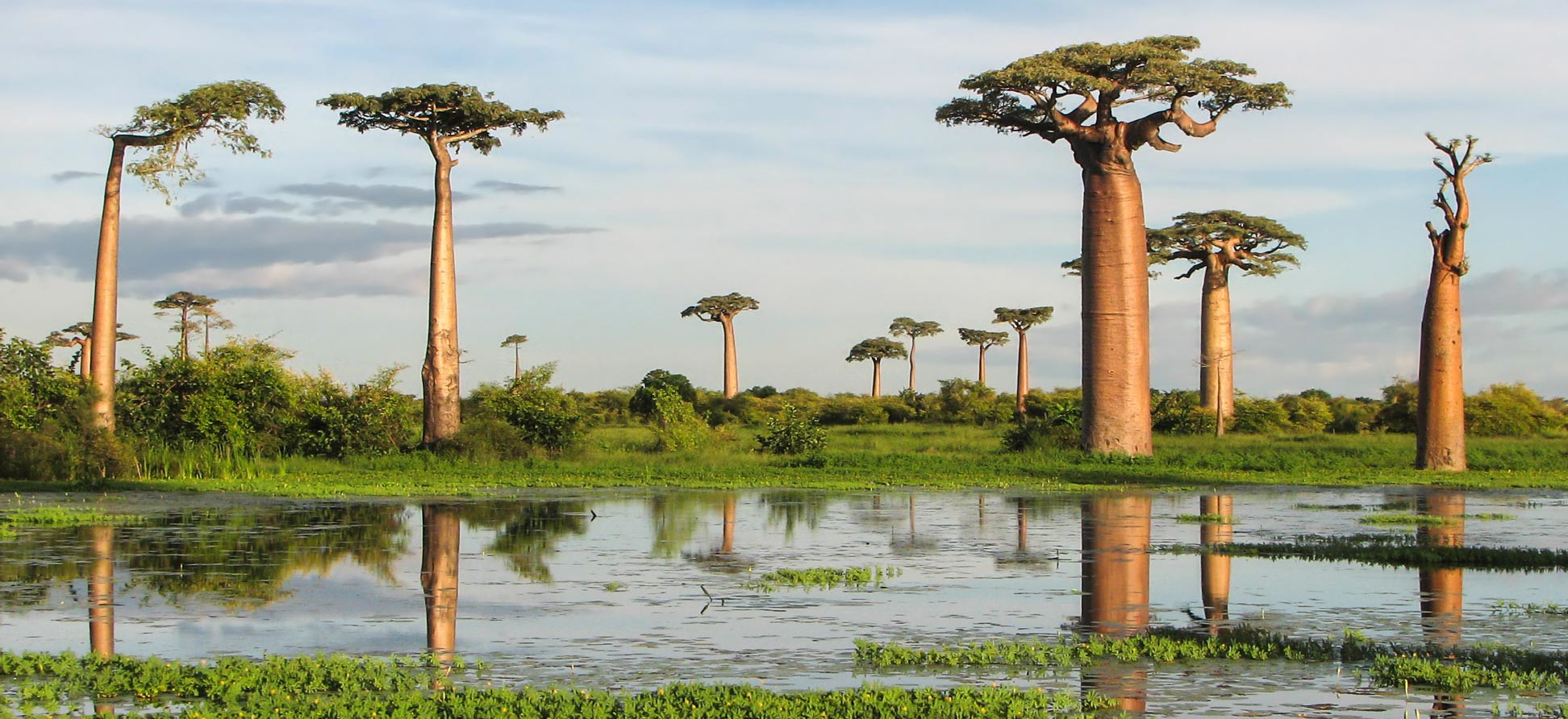
• Visit the famous Baobab Avenue,
• Meet traditional villages, local tribes, and experience their customs.
Itinerary
Day 1 – Antananarivo
Arrival at the international airport of the capital and transfer to the hotel. We will explore the city’s attractions and end the day with a dinner.
Meals: Dinner
Day 2 – Antananarivo to Antsirabe (170 km, 4 hours)
After breakfast, we will depart by road for the city of Antsirabe, the third largest city in Madagascar. Along the way, we will make a short stop in Ambatolampy, known for its aluminum deposits, before arriving in Antsirabe. The city is known as “the land of salt” and as a center of industry in Madagascar. We will begin exploring the “City of Water,” a name derived from the abundance of thermal springs and lakes in the area. The day continues with an interesting visit to a local workshop that creates miniatures from recycled materials.
Meals: Breakfast, Dinner
Day 3 – Antsirabe to Miandrivazo (220 km, approx. 5 hours)
This day is dedicated to the journey towards the town of Miandrivazo. We will cross the highlands of Madagascar, passing through lush rice fields contrasted with the characteristic red houses, and continue westward through vast grasslands.
Meals: Breakfast, Dinner
Days 4-5-6 – Adventure on the Chiribihina River
(First day: 8-hour boat excursion
Second day: 8-hour boat excursion)
During these days, we will experience a unique 2.5-day journey along the Chiribihina River by boat, interspersed with hikes, riverside camping, and 4×4 excursions. We will have the opportunity to observe endemic birds inhabiting this tropical paradise, swim in natural pools, and explore local traditional villages. The gorge of Bemaraha National Park will take your breath away, while the village of Bekopaka, at the base of Bemaraha Tsingy, will charm us with the customs and lifestyle of the local tribes.
Meals: Breakfast, Lunch, Dinner
Day 7 – The Great Tsingy (1.5-hour canoe + 15 km by car + 2-hour hike in the National Park)
On the seventh day, we will explore the Tsingy, a unique landscape of limestone formations that has been a UNESCO World Heritage Site since 1990. The park is distinguished by its sharp limestone peaks, sculpted by wind and water, reaching up to 60 meters in height. It forms a true labyrinth of gorges and fissures while providing an excellent refuge for wildlife. Hiking in the park requires good physical condition. Alternatively, there is the option to visit the small Tsingy near the village, where you can see the limestone formations on a smaller scale.
Meals: Breakfast, Dinner
Day 8 – The Great Tsingy to Morondava (200 km, 8-hour journey by car and boat)
We will travel to Morondava through a route that offers a variety of landscapes. We will pass through the so-called dry forests of Madagascar and make a stop at the famous “Avenue of the Baobabs.” Here, we will enjoy a magical sunset, cross the Chiribihina River again by boat, and complete the journey by car.
Meals: Breakfast, Dinner
Day 9 – Morondava to Antsirabe (490 km, 8-hour drive)
We return to the city of Antsirabe and stay overnight.
Meals: Breakfast, Dinner
Day 10 – Antsirabe to Ranomafana
Heading to Ranomafana National Park, one of the richest biodiversity areas in the world, we will cross the Highlands, stopping in the town of Ambositra, known for its carpenters and woodcarvers—an art introduced by the Zafimaniry people. This town is also the center of Madagascar’s woodworking industry. Upon arrival, we will visit a Zafimaniry woodcarving workshop to learn about this local craft, which is listed as Intangible Cultural Heritage by UNESCO. During our transfer to Ranomafana National Park, we will have the opportunity for an introductory walk in the area.
Meals: Breakfast, Dinner
Day 11 – Ranomafana to Ambalavao
Early in the morning, we will start our visit to Ranomafana National Park, accompanied by experienced local guides. The park is home to twelve protected endemic lemur species (primates), some of which are extremely rare and classified as endangered, such as the golden bamboo lemur (critically endangered) and the eastern woolly lemur (Avahi). Other species include the mouse lemurs, dwarf lemurs, and the Rufous lemur. The park also hosts small endemic mammals like mongooses and tenrecs—a hedgehog-like species—while its birdlife is remarkable, with 118 recorded species, some extremely rare. In the afternoon, we will travel by road to Ambalavao.
Meals: Breakfast, Dinner
Day 12 – Ambalavao to Ankaratra (30 km by road + 7 hours hiking in the park)
Today we will visit Ankaratra National Park, designated in 2007 as a UNESCO World Heritage natural site. After a road trip of approximately 2 hours, covering around 30 km from Ambalavao, we will reach the Andriantelo River bridge, which marks the starting point of our hike.
After two hours on the trail, we will have a picnic lunch and then continue hiking for approximately 1 hour and 30 minutes, reaching the park entrance at an altitude of 1,550 m. We will enjoy the waterfalls along the way before continuing on a steep path, leaving the forest behind and arriving at the Andohariana plateau. There, we will ascend the impressive granite mountains of the park, ranging in altitude from 720 m to 2,658 m.
Throughout the hike, we may encounter various species of orchids, birds, and reptiles such as chameleons, lizards, and snakes, and with some luck, we might even spot lemurs.
Meals: Breakfast, Lunch, Dinner
Day 13 – Pic Boby Trekking (4-hour hike)
On our second day in the park, we will start very early (around 3 a.m.) to ascend Pic Boby, aiming to enjoy the sunrise before the first clouds of the day appear. The ascent to 2,658 m takes approximately 2 to 3 hours, depending on the pace of the group, and passes through beautiful landscapes with rare plants and birds. Pic Boby is the highest easily accessible peak in the country.
Meals: Breakfast, Lunch, Dinner
Day 14 – Antringitra – Ambositra
After breakfast, we leave the campsite, cross a small plateau, and with a short ascent reach the first viewpoint at 1,500 m. Then we descend again, admiring the stunning view of the Tsaranoro Valley, the western slope of Tsaranoro Rock, and the village of Manamisoa. We will cross the river and, with a short uphill walk, reach the village of Morarano, where our vehicle will pick us up.
By road, we continue to Ambalavao, the center of winemaking in Madagascar. The region’s climate is ideal for vineyards, and winemaking traditions were introduced by the priests and monks of Fianarantsoa. We will stop at the Anja Reserve, hoping to see lemurs in their natural habitat. We will also visit local silk and paper workshops before continuing to Ambositra.
Meals: Breakfast, Dinner
Day 15 – Ambositra – Antananarivo
After breakfast at the hotel, we will visit an authentic Zafimaniry woodcarving workshop. On the way back, we will stop at Ambatolampy, known for its aluminum deposits, and visit a local workshop.
Meals: Breakfast, Dinner
Day 16 – Antananarivo – Return Flight
After breakfast at the hotel, we will transfer to Ivato International Airport in Antananarivo for our return flight to Greece.
Meals: Breakfast-
Rates
| Τύπος δωματίου |
Τιμή | Early bird booking (μέχρι τις 10/01/24) |
| Double room (Double Bed) | 2.900.00€ | 2.780,00€ |
| Twin room (2 single beds) | 2.900.00€ | 2.780,00€ |
| Single room | 3.500.00€ | 3.380,00€ |
| Bookings are confirmed upon payment of a deposit (40% of the total price). | ||
What’s included in the price:
– Greek tour leader from NomadsPath
– Accommodation in hotels for 11 nights
– Camping for 2 nights along the river crossing with full board on days 4 and 5
– Camping for 2 nights in Antringitra with full board on days 12 and 13
– Meals as specified in the itinerary
– Boat transfers
– All transfers mentioned in the itinerary
– Local English-speaking guide throughout the trip
– Private air-conditioned minibus/pullman and 4×4 vehicle for unpaved roads (Morondava–Tsingy and Ambalavao–Andringitra)
– Fuel and driver for all land transfers,
– All visits and excursions mentioned in the program
– Entrance fees and local guide services in all parks and reserves listed in the itinerary
– Taxes
What’s not included in the price:
– Air tickets to and from Madagascar
– Visa fees
– Drinks
– Any excursions or visits not mentioned in the itinerary
– Personal items, tips, and souvenirs
– Travel insurance
– Any costs for early departure or extended stay
– Any expenses incurred in case of hospitalization
Useful Info
Accommodation
We use 2–3 star tourist-class hotels throughout the trip, set in natural surroundings yet offering a comfortable stay. Most hotels are equipped with mosquito nets in the rooms. Please note that although all hotels state they have reliable electricity and water supply, occasional outages may occur. Some hotels do not provide 24-hour electricity, and in certain cases hot water may not always be available. Wi-Fi is available in most hotels, but often only in common areas and not in the rooms. Single-room accommodation is available on this trip at an additional cost.
Food & Transportation
Food & Drinks
Food in Madagascar is generally of good quality, especially along the coast where seafood is widely available. A one-course lunch or dinner costs around €6–8, while a three-course meal costs approximately €12–18. You should budget about €200 for meals not included in the program, and a bit more if you enjoy having drinks with dinner.
Madagascar lager beer is reasonably priced and widely available. Local wine is also affordable, although it may not suit everyone’s taste. Occasionally, French or South African wines can be found. A pleasant surprise in Madagascar is the variety of flavored rums, which are widely sold and very reasonably priced.
Please note that if you do not eat fish or meat, your food options on this trip will be rather limited (e.g. omelets, cheese, pasta, vegetables, and rice). Breakfast is usually simple and includes eggs, jam, coffee or tea, and sometimes fruit. You may wish to bring something to supplement your breakfast (such as tahini, peanut butter, etc.).
Transportation
We use a private coach/minibus, which is fairly comfortable during transfers and usually equipped with air conditioning.
4×4 Off-road Vehicles:
The coach will accompany us for most of the trip, except for the journey to Tsingy, which requires a high-quality 4×4 vehicle. The 4×4 will be used for the three days of dirt-road travel to Tsingy.
Weather Information
Madagascar has a tropical climate with two main seasons: a wet season and a dry season. The driest period generally runs from April to October.
Evenings can be quite cool on the Central Highlands (including Antananarivo) and in rainforest areas, so warm clothing is recommended, such as a fleece and a waterproof jacket. Temperatures can vary significantly across the country, but coastal regions are typically hot and dry throughout this period.
Overall, travelers should be prepared for a wide range of weather conditions, from cooler nights in higher elevations to warm, sunny days along the coast.
What to Pack – Essential Equipment
Everyday clothing suitable for warm weather. As temperatures are generally high, lightweight cotton clothing is recommended for most of the trip. However, evenings can be cooler on the Central Highlands (including Antananarivo) and in rainforest areas, so be sure to bring some warm layers, such as a fleece and a waterproof jacket.
Being prepared with versatile clothing will ensure comfort across Madagascar’s varied climates, from warm coastal regions to cooler highland nights.
We recommend bringing the following items with you:
Sunscreen
Flashlight / headlamp
Lightweight waterproof jacket
Sunglasses
Hat
Antibacterial hand gel
Insect repellent
Comfortable hiking/walking shoes
Swimsuit
Warm sweater or fleece jacket (as nights can be cool)
Long trousers and socks
A first aid kit is always available on every trip; however, you should bring your own personal kit including anti-diarrhea medication, painkillers (paracetamol, Imodium, aspirin), oral rehydration salts, plasters, and basic wound dressings.
Optional Equipment
Binoculars
Camera
Backpack
Earplugs, if you are sensitive to noise while sleeping
Vaccinations
For information regarding required or recommended vaccinations and health precautions, please consult your personal physician as well as the official public health resources below:
https://eody.gov.gr/eody/
https://eody.gov.gr/wp-content/uploads/2019/07/eidiki-ekdosi.pdf
Up-to-date medical advice is essential before traveling, as health recommendations may change.
Electricity
Electricity in Madagascar operates at 127 & 220 volts.
Plug types commonly used are C, D, E, J, and K. Many sockets accept two-pin plugs.
Madagascar mainly uses the standard European two-pin, non-grounded plug (Type C or E). We recommend bringing a universal travel adapter.
Money
Currency of Madagascar
The national currency is the Ariary (MGA).
At the time of publication (December 2023), the exchange rate is approximately 4,950 MGA = 1 EUR.
Cash is widely used, especially outside major cities, so it is advisable to carry sufficient local currency during your travels.
ATM Availability
ATMs are available only at the airport and in Antananarivo.
Additional Expenses and Money Matters
A Visa card (not Mastercard) can be used to withdraw local currency at certain banks. It is recommended to bring cash in Euros or US Dollars, as it is easier to exchange into the local currency. There is no limit on the amount of foreign currency that can be brought into the country, provided it is declared upon arrival. Please note that you cannot rely on credit cards for payments, as they are rarely accepted. It is advisable to exchange all money at the airport upon arrival.